Historyline Font Review: A Delicate Script for Branding
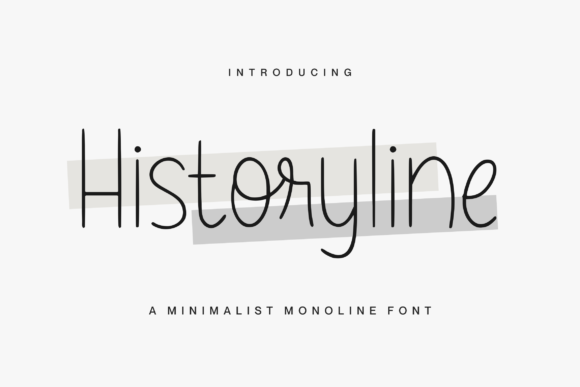
Last Tuesday, I found myself staring at a stack of plain white bakery boxes that felt entirely too generic. The pastries inside were artisanal, warm, and full of character, but the packaging told a different story. It was quiet, almost invisible. As a creative consultant who works closely with small business owners, I know this feeling well. You have an incredible product, but the visual identity hasn't quite caught up to the quality of what you are selling. That afternoon, while refreshing the brand assets for a local café looking to elevate their takeout experience, I decided to test drive Historyline. This thin lettered and delicate script font turned out to be exactly the missing piece needed to bridge the gap between a homemade vibe and a polished, professional brand.
When you first load Historyline into your design software, the immediate impression is one of airiness and grace. Unlike many heavy-handed scripts that try too hard to be bold, this typeface whispers. It has a clean, thin, and smooth vibe that feels incredibly modern yet timeless. For business owners in the lifestyle, beauty, or food sectors, finding a font that balances elegance with readability is often a struggle. Historyline manages to feel personal without being messy. It is a script font that retains the fluidity of handwriting but maintains the structural integrity required for commercial use. Whether you are designing a logo for a skincare line or updating the header on your online shop banner, this font brings a level of sophistication that instantly makes a brand look more established.
Transforming Packaging with Delicate Typography
The real test for any typography is how it performs on physical products. We applied Historyline to the new labels for a small-batch candle maker who was struggling to make her jars stand out on crowded retail shelves. Her previous labels used a standard sans serif font that, while legible, lacked emotion. By switching to Historyline for the scent names and the brand signature, the entire perception of the product shifted. The thin strokes of the font allowed the label design to breathe, creating a sense of luxury and care.
Because Historyline is so delicate, it works exceptionally well on packaging where space is limited but impact is necessary. Think about a boutique clothing tag or a sticker sealing a handmade soap wrapper. In these instances, a bulky font can overwhelm the design, but a refined script like this acts as a decorative accent that draws the eye without dominating the space. It tells the customer that attention to detail was paid not just to the product, but to the presentation. This subtle cue builds trust; customers often perceive a brand with beautiful, consistent typography as being more reliable and higher quality.
Digital Presence and Social Media Consistency
Beyond physical goods, the digital storefront is where first impressions happen today. We used Historyline to refresh a set of Instagram templates for a life coach who wanted her feed to feel more approachable yet professional. The results were immediate. The font's smooth lines translated beautifully onto mobile screens, provided we kept the text large enough. One crucial piece of advice when using delicate scripts like Historyline for social media graphics or website banners is to ensure high contrast. Because the strokes are thin, they can get lost against busy backgrounds or low-resolution images. Pairing the font with a solid, clean background or using it over a soft, blurred photo ensures that every curve remains crisp and readable.
Consistency is the secret sauce of strong brand identity. By using Historyline across digital ads, email headers, and story highlights, a business creates a visual thread that ties everything together. When a potential client sees the same elegant typography on your Facebook ad as they do on your thank-you card, it reinforces brand recognition. It stops the scroll. In a sea of loud, bold, and chaotic content, the quiet confidence of a well-chosen script font can be surprisingly powerful.
Practical Pairing and Readability Tips
While Historyline is stunning on its own, it truly shines when paired correctly. A common mistake non-designers make is pairing a script with another busy font, which creates visual noise. Since Historyline is a light, flowing script, it pairs best with a geometric sans serif font or a structured serif font. For the café menu project, we paired it with a clean, medium-weight sans serif for the item descriptions and prices. This created a perfect hierarchy: the script drew attention to the special items and section headers, while the sans serif ensured the details were easy to scan quickly.
Readability should always be your top priority. Historyline is a display font by nature, meaning it is best suited for headlines, short phrases, logos, and titles rather than long blocks of body text. If you try to write a paragraph of terms and conditions in this font, your customers will strain their eyes. Instead, reserve it for the moments that matter most—the name of your shop, the title of your latest collection, or a heartfelt "Thank You" on a receipt card. When used for its intended purpose, it adds a human touch that cold, mechanical fonts simply cannot replicate.
Making the Final Decision for Your Brand
Choosing the right typeface is a significant investment in your business's future. Before downloading or purchasing Historyline for your next project, there are a few practical steps to take. First, check the included file formats to ensure they work with your specific design tools, whether you are using Adobe Illustrator, Canva, or Procreate. Look for features like alternates and ligatures; these allow you to swap out certain letters to create unique combinations, ensuring your logo doesn't look exactly like everyone else's.
Additionally, always verify the licensing terms. If you plan to use this font on products you intend to sell, such as printed t-shirts, mugs, or digital downloads, you need to confirm that you have the appropriate commercial font license. Most premium fonts offer different tiers of licensing depending on the scale of your business. Finally, consider your audience. If your brand is playful and loud, this delicate script might be too subtle. But if you are building a brand around wellness, artisanal crafts, luxury goods, or personalized services, Historyline offers that perfect blend of history and modernity. It is a tool that, when used with intention, can turn a simple transaction into a memorable brand experience.